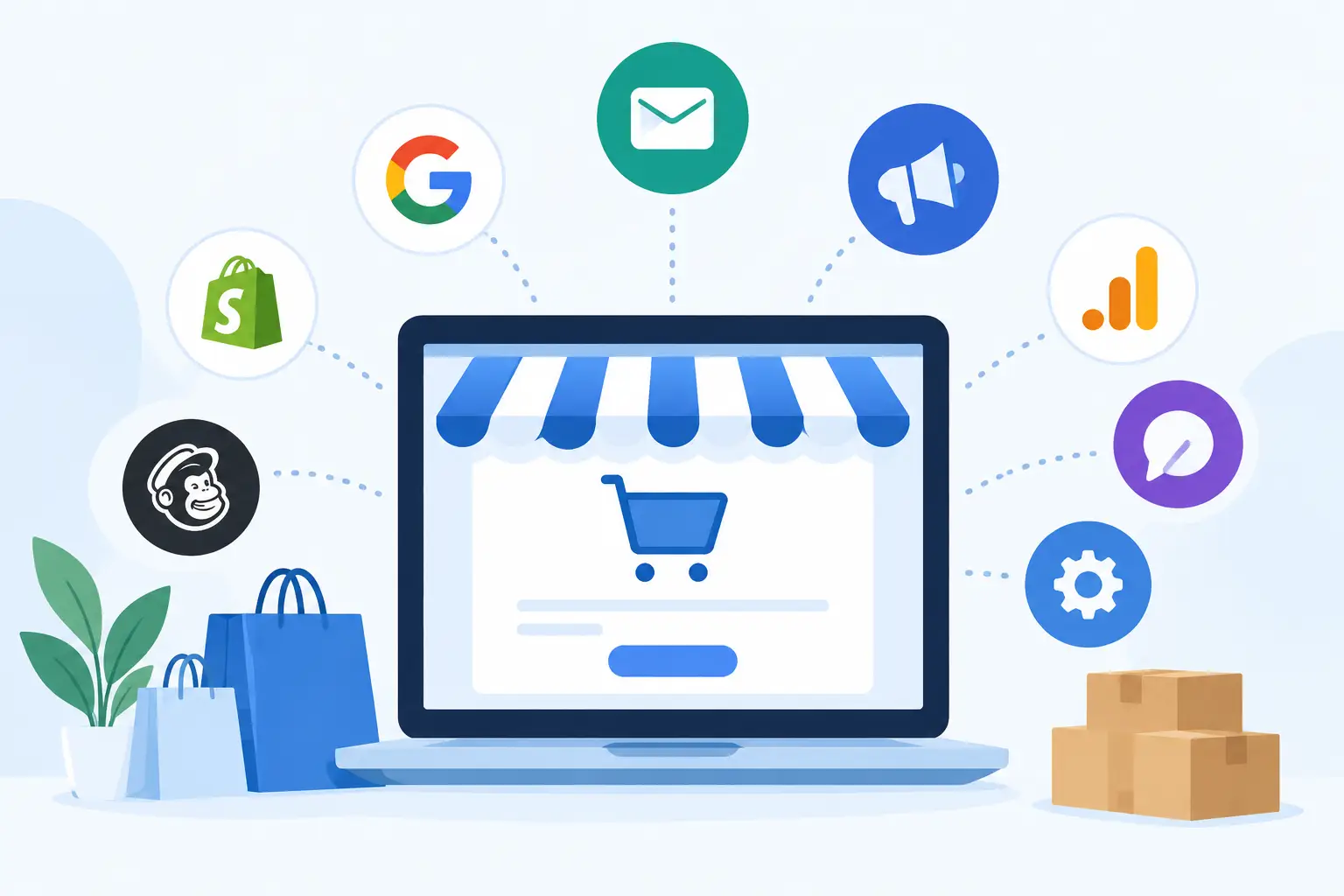
A disconnected ecommerce stack leaks revenue in places most brands never see: the cart that is abandoned without a follow-up, the five-star review that never reaches a shopper, the VIP customer who gets the same offer as everyone else. The best ecommerce marketing integrations turn those gaps into automated, measurable revenue opportunities.
For growth-focused ecommerce brands, an integration is not a badge on a software marketplace. It is a working connection between customer behavior and the next best action. When a shopper buys, browses, leaves a cart, joins a loyalty program, or clicks a campaign, your systems should respond fast. That is how teams sell more without adding manual work to every campaign.
What Makes an Ecommerce Integration Worth Adding?
The right integration does three jobs. First, it moves useful customer data between systems without CSV exports and spreadsheet cleanup. Second, it triggers campaigns based on real behavior rather than a generic calendar. Third, it gives your team a clear line from message to revenue.
That standard matters because more integrations are not automatically better. A cluttered stack can create duplicate contacts, conflicting automations, and reporting nobody trusts. Start with the points where money is already being left on the table: checkout abandonment, low repeat-purchase rates, weak review volume, slow payment collection, or a growing support queue.
For regulated brands, there is another requirement: channel compliance. Firearms, alcohol, and tobacco businesses need messaging tools built to support carrier requirements, consent management, and appropriate registration workflows. Vape, CBD, THC, and cannabis-adjacent brands cannot use carrier SMS or text messaging. Their growth strategy needs approved channels such as email and Telegram instead.
The 10 Best Ecommerce Marketing Integrations for Growth
1. Your Ecommerce Storefront
Your storefront is the center of the operation. Whether you sell from a standard online store, a custom checkout, or a multi-location catalog, it should pass product, order, customer, inventory, and cart events into your marketing platform.
This connection powers the campaigns that actually move revenue: abandoned cart reminders, browse abandonment, post-purchase thank-yous, replenishment reminders, back-in-stock alerts, and product-specific upsells. Without storefront data, marketing is guesswork. With it, every message can reflect what a customer actually considered or purchased.
2. SMS, Email, and Approved Direct-Messaging Channels
The highest-value communication integration connects your customer data to the channels customers check most. Email is essential for long-form offers, education, receipts, and product launches. SMS can create fast action for eligible, properly opted-in audiences, especially around limited inventory, flash offers, and appointment reminders.
Channel fit depends on your industry. A cigar retailer may use compliant SMS and email to drive repeat visits. A cannabis-adjacent brand should build its direct-response workflow around Telegram and email, not carrier text. The key is not forcing every customer into one channel. It is capturing consent correctly, segmenting intelligently, and using the channel each audience can receive.
3. Customer Loyalty and Rewards
A loyalty integration turns one-time buyers into customers with a reason to return. It can sync points balances, tiers, referral activity, and reward redemptions to your marketing platform, allowing campaigns to reflect a customer’s actual status.
That means you can send a reminder when someone is close to a reward, welcome a new VIP, or give inactive loyalty members a focused reason to come back. Loyalty works best when it is tied to communications, not hidden behind a checkout widget customers forget exists.
4. Reviews and User-Generated Content
Reviews do more than build trust on product pages. When review activity syncs with your customer records, it becomes valuable segmentation data. A customer who leaves a five-star review is a strong candidate for a referral request or early-access offer. A customer with a poor experience needs service recovery before they receive another promotion.
Automated review requests should be timed around delivery or expected product use, not fired immediately after checkout. The goal is to collect credible feedback while the experience is fresh. Then use that feedback to improve products, support, and campaigns.
5. Payment Collection Tools
Payment integrations are especially valuable for businesses that sell services, take deposits, collect invoices, or operate across multiple locations. A payment link sent through email, SMS for eligible industries, or website chat can shorten the distance between interest and purchase.
The best workflow is simple: send the payment request, detect whether it was completed, and trigger an appropriate follow-up if it was not. This reduces awkward manual chasing and gives sales teams cleaner visibility into what is still outstanding.
6. Website Chat
A shopper who has a question at the product page is close to a decision. Website chat gives them a path forward without forcing them to hunt for an email address or leave the site. Connected to your marketing system, chat can also capture leads, identify repeat visitors, and route high-intent conversations to the right team.
Use chat where friction is highest: shipping questions, product compatibility, appointment booking, financing questions, and order status. Keep the experience helpful. A pop-up that interrupts every visitor is not a strategy. A timely answer that saves a sale is.
7. Inventory and Back-in-Stock Data
Nothing creates urgency like a product a shopper wanted becoming available again. An inventory integration lets you trigger back-in-stock alerts based on real stock levels instead of manually building a campaign after the opportunity has already passed.
This is particularly effective for seasonal products, limited releases, high-demand accessories, and items with unpredictable replenishment schedules. Give subscribers the ability to request an alert by product, then notify them before broadcasting the release to your entire list. The result is cleaner targeting and faster sell-through.
8. Customer Support and Help Desk Data
Support conversations should influence marketing. If a customer has an unresolved shipping issue, a return request, or a negative service interaction, they should not immediately receive a cheerful promotion. Syncing help desk data helps teams suppress inappropriate campaigns and prioritize recovery.
On the other hand, resolved tickets can create smart follow-up opportunities. A customer who asked how to use a product may benefit from an educational sequence. A customer whose replacement order arrived can receive a review request after the issue is resolved. Better customer experience and better marketing are not separate systems.
9. Analytics and Revenue Attribution
Campaign clicks are nice. Revenue is the scorecard. Analytics integrations should connect campaign activity to orders, average order value, repeat purchase behavior, and customer lifetime value.
Look for reporting that answers practical questions: Which automations generate the most revenue? Which segment responds to a product launch? Did a back-in-stock alert produce sales, or just clicks? Can we see performance by location, audience, or channel? If your reporting cannot answer those questions, your team will make decisions based on noise.
10. Automation and Workflow Connectors
Workflow integrations connect the systems that do not naturally talk to each other. They can notify a team when a high-value lead arrives, add a buyer to a post-purchase sequence, update a CRM record after payment, or trigger a review request after fulfillment.
This is where growing brands gain speed. The right automation removes repetitive handoffs while keeping humans involved where judgment matters. Build the workflow around a real business process first, then choose the connector. Automating a messy process only makes the mess happen faster.
How to Prioritize Your Ecommerce Marketing Stack
Start with the customer journey, not the app directory. Map what happens from first visit through purchase, delivery, repeat order, and referral. Then mark the moments where customers stall, disappear, or need a better reason to act.
For many stores, the first priorities are storefront data, direct messaging, abandoned cart recovery, and revenue reporting. Add loyalty, reviews, chat, and payment collection based on the friction your business actually has. A high-repeat consumables brand may prioritize replenishment and VIP rewards. A retailer with complex products may get a bigger lift from chat and education flows.
Before activating any integration, verify how customer data is synced, how often it updates, who owns consent records, and what happens if a contact unsubscribes. These details are not glamorous, but they protect deliverability, reporting accuracy, and customer trust.
OtterText brings messaging, loyalty, reviews, payments, website chat, and automated workflows into one growth-focused platform, helping teams reduce stack sprawl while keeping campaigns tied to real customer behavior.
The winning stack is not the one with the most logos. It is the one that notices intent, responds quickly, respects channel rules, and gives your team a repeatable path from customer action to more revenue.