Most gun store owners see a waiting period as dead time. The buyer pays, the clock starts, and nothing happens until pickup day. Some buyers come back on schedule. Others come back late, come back annoyed, or never come back at all.
Here is a different way to look at it. A waiting period is the only time in retail when a customer has already committed to buying from you, already paid, and is guaranteed to walk back through your door on a specific date. No other retailer gets that. A furniture store would love to know exactly when a buyer is returning and to have a few days to talk with them beforehand.
Gun stores in waiting-period states have exactly that. The question is whether they use it.
Treat the hold as dead time, and it costs you. Treat it as a scheduled sales channel, and it pays you on every single firearm you sell.
Which States Have Waiting Periods
This guide applies anywhere a hold exists, but it is built especially for states where the waiting period is the main hurdle:
| State | Waiting period | Current status |
|---|---|---|
| New Mexico | 7 calendar days on most purchases | The Tenth Circuit ruled in 2025 that the law likely violates the Second Amendment, but the state still enforces it against most buyers while litigation continues |
| Vermont | 72 hours on firearm purchases | In effect |
| Maine | 72 hours on firearm purchases | The First Circuit allowed it to stand in April 2026; a petition is now before the U.S. Supreme Court |
| Florida | 3 business days on handguns, with some local variation | In effect; licensed concealed carriers are generally exempt |
Several other states covered in this series also impose waits, including Colorado, Illinois, Rhode Island, Maryland, California, and Washington.
The legal fight matters. Federal appeals courts now disagree on whether waiting periods are constitutional, and the Supreme Court may eventually settle the question. Some of these waits could disappear within the next year or two.
That is exactly why this playbook is worth building now. Even without a legal waiting period, every firearm sale includes some gap: a delayed background check, a special order, a transfer, or a buyer who needs to come back after work. The habits you build around waiting periods today will keep paying off whatever the courts decide.
Step One: Set Up the Hold Before the Buyer Leaves
Everything in this playbook depends on a few minutes at the counter. Before the buyer walks out on day one, do three things.
Get consent to stay in touch. Collect the buyer’s mobile number along with clear, written consent to receive updates about their purchase and your store. A checkbox on your purchase form works well. Without consent, you cannot legally send the marketing messages that make this strategy work.
Confirm the pickup date out loud. Buyers often misunderstand how waiting periods are counted, especially when weekends, holidays, or business days are involved. Tell them the exact date and time pickup opens, then confirm it in writing. A buyer who knows their date shows up on time.
Learn what they need. Ask a few quick questions while the paperwork runs. Is this a first firearm? Will it be used for home defense, carry, hunting, or the range? Do they own a safe? Do they have ammunition for this caliber? Their answers tell you exactly what to suggest during the hold.
Step Two: Plan the Messages for the Hold
A great waiting-period sequence feels helpful, not pushy. Each message gives the buyer something useful while gently suggesting something to add before pickup.
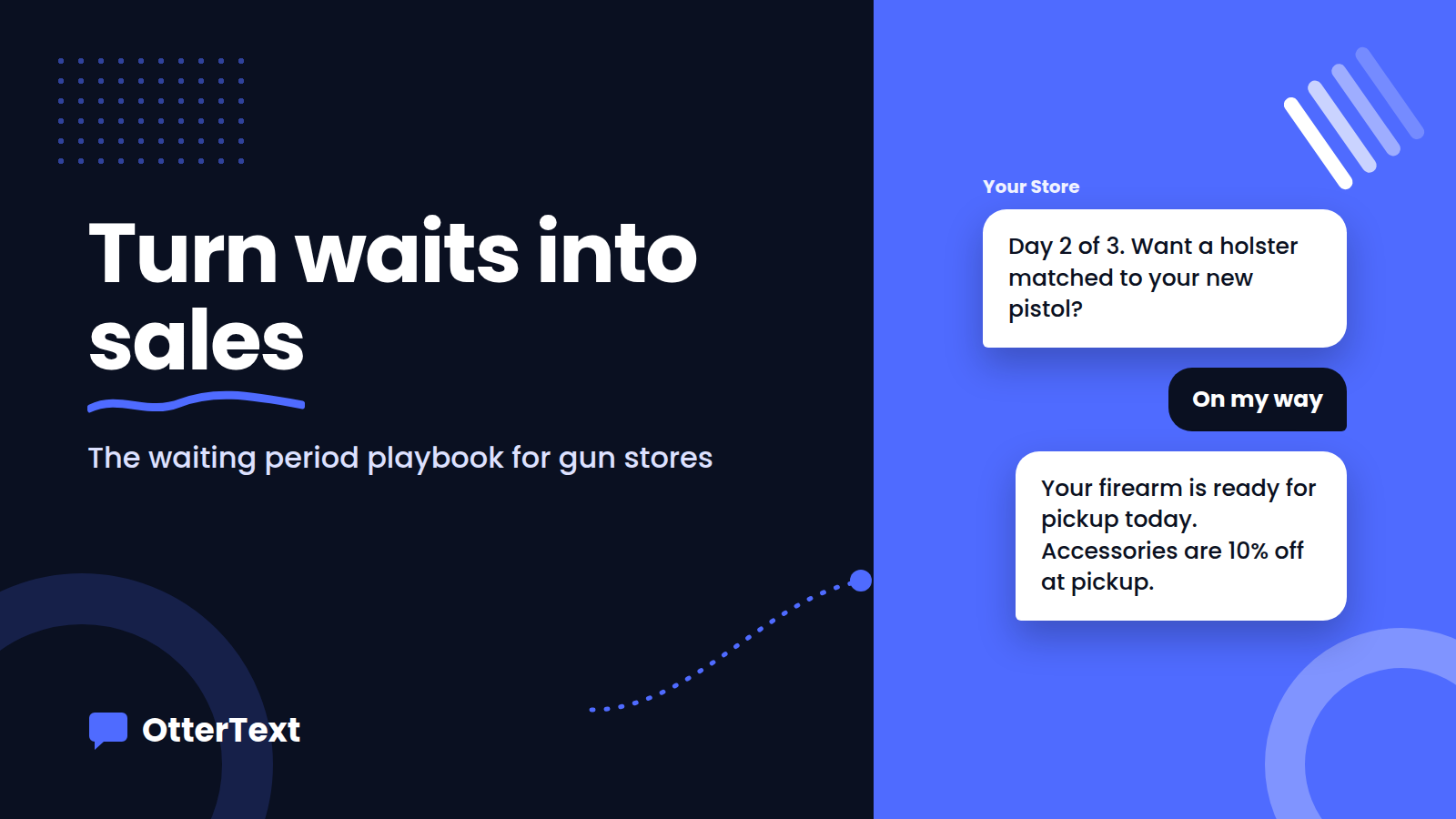
Here is a sample sequence for a 72-hour hold:
- Right after purchase: “Thanks for buying with us! Your firearm will be ready for pickup on Friday after 2 PM. Questions before then? Just reply.”
- Day 2: “Quick tip: a lock box keeps your new handgun secure and within reach. Want us to set one aside for pickup?”
- Pickup day: “Your firearm is ready for pickup today! Any accessories you add at pickup are 10% off.”
For a seven-day hold, stretch the same idea across a week:
- Day 1: confirmation and pickup date.
- Day 3: a safe-storage tip with a storage product suggestion.
- Day 5: an invitation to book a first range session or class.
- Day 6: “Tomorrow is pickup day. Want a holster, light, or extra magazine waiting for you?”
- Day 7: the pickup-day offer.
Match the suggestions to what you learned at the counter. A first-time handgun buyer should hear about holsters, lock boxes, and intro classes. A hunter should hear about optics, slings, and cases. Relevant suggestions convert; generic ones get ignored.
Step Three: Pre-Build the Pickup Order
The most effective waiting-period tactic is simple: let buyers add items to their pickup before they arrive. When a buyer replies “yes” to a holster suggestion, pull it, bag it, and have it waiting with their firearm. Pickup becomes faster, the buyer feels taken care of, and your average ticket grows without any hard selling at the counter.
Ranges can play the same game with classes and memberships. A buyer who books an intro session during the hold arrives at pickup with their next visit already on the calendar.
Retail stores without a range should partner with one nearby. Include the range’s booking link in your hold sequence, and ask the range to send its students back to you for accessories and ammunition. If the range uses booking software such as RangeWorks or Taplo, sharing a direct link takes seconds.
Step Four: Make Pickup Day the Peak
Pickup day is the moment a buyer feels most excited about their purchase. Plan for it.
Send the pickup message early in the day so the buyer can plan their visit. Keep the offer simple and time-bound, such as 10% off accessories added at pickup. Have pre-built orders bagged and ready. Then make the handoff memorable: walk the buyer through their firearm, confirm they have what they need, and invite them to a class or range day.
After pickup, keep the relationship going. A short follow-up a week later asking how their first range trip went, paired with a reminder about ammunition or classes, turns a one-time buyer into a regular customer.
In Florida, also remember that licensed concealed carriers are generally exempt from the state’s handgun waiting period. Promoting concealed carry classes to first-time buyers gives them a faster path on their next purchase and gives you or your range partner another sale.
Step Five: Automate It Once
None of this works if it depends on busy staff remembering to send messages. Build each sequence once and let it run for every buyer.
OtterText lets firearms retailers and ranges automate hold sequences, pickup reminders, and follow-ups across every sale. Messages can go out by SMS, email, or Telegram, and Telegram runs outside the carrier networks that filter firearm content.
Step Six: Stay Compliant and Delivered
Firearm-related text messages face more scrutiny than almost any other retail category. Wireless carriers treat them as sensitive content and filter them aggressively, and the Telephone Consumer Protection Act (TCPA) requires clear consent before you send marketing texts. A few habits keep your program safe:
- Collect written opt-in with a clear checkbox on your purchase form.
- Register your messaging through 10DLC, and expect extra review as a firearms business.
- Separate transactional and promotional messages. A pickup confirmation and an accessory offer follow different rules.
- Write professionally about orders, pickups, classes, and products.
- Include opt-out instructions in every marketing message.
- Offer Telegram as a second channel so important updates arrive even when carrier filters tighten.
Many mainstream texting platforms prohibit firearms businesses or shut down their accounts without warning. OtterText was built for regulated industries, including firearms retailers and ranges, so compliance is part of the setup.
The Waiting Period Playbook
- Set up the hold at the counter with consent, a confirmed pickup date, and a few questions about the buyer’s needs.
- Plan a message sequence that matches the length of your state’s hold.
- Pre-build pickup orders from the buyer’s replies.
- Make pickup day the peak with a time-bound accessory offer and a warm handoff.
- Automate everything so it runs on every sale.
- Stay compliant so every message actually arrives.
Waiting periods may change as the courts weigh in. The habit of staying in touch between purchase and pickup will not. Build it now, and every hold becomes a scheduled sales appointment.
Ready to turn every waiting period into revenue? See how OtterText helps firearms retailers and ranges automate the hold from purchase to pickup.
This article is general information, not legal advice. Waiting period laws vary by state and are in active litigation, so confirm current requirements with your state authorities and consult a licensed attorney.