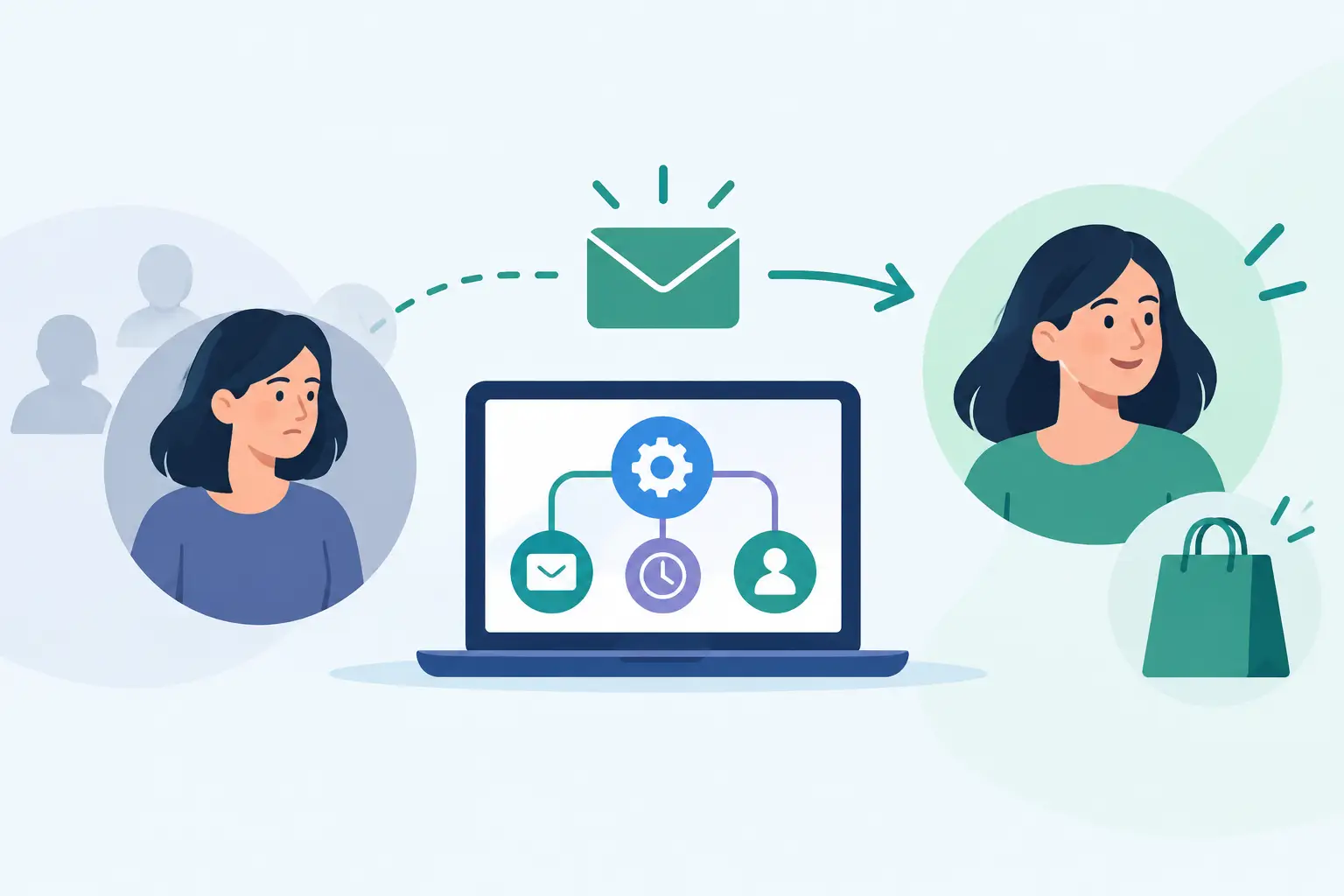
A customer who bought once, joined your loyalty program, or requested a quote is not a dead lead just because they went quiet. They already know your business. The real question is how to automate winback campaigns that give them a timely, relevant reason to return without blasting your entire database with the same tired discount.
For retailers, ranges, beverage brands, tobacco businesses, service operators, and multi-location teams, winback automation turns dormant customer data into repeat revenue. Done well, it makes your marketing work while your team focuses on the next sale. Done poorly, it trains customers to wait for discounts or sends messages through channels that do not fit your compliance requirements.
Start with a clear definition of “inactive”
A winback campaign should not target everyone who has not purchased in 30 days. That window means something very different for a weekly cigar customer, a seasonal event buyer, a gun range member, and a home-services client who may only need help once a year.
Set inactivity thresholds around your actual buying cycle. If the average customer returns every 45 days, a 60- to 75-day winback trigger may make sense. If your product is seasonal, build triggers around the end of the relevant season, a lapsed membership date, or the expected replenishment window. The goal is to reach people when their silence is meaningful, not simply when a calendar says so.
Your customer data should also tell you who not to include. Exclude recent purchasers, open support issues, refunded orders, customers already enrolled in another high-frequency promotion, and contacts who have opted out. This keeps the experience useful and protects your sending reputation.
Build winback segments around value, not just silence
The best automated winback campaigns do not treat every inactive contact the same. A one-time buyer who spent $25 needs a different message than a loyalty member with a history of high-value purchases.
Start with three practical groups: recent first-time customers who did not return, previously loyal customers whose activity dropped, and high-value customers at risk of leaving. Each group has a different reason to come back. The first group may need product education or a simple second-purchase incentive. A formerly loyal customer may respond better to a personal-feeling reminder, early access, or a loyalty-point update. High-value accounts often deserve a more direct offer or outreach from a local team.
Add behavior to the segment whenever possible. Look at last purchase category, location, average order value, loyalty balance, website activity, appointment history, and whether the customer engaged with past email or messaging. This is where automation stops being a generic reactivation blast and starts acting like a revenue engine.
Choose the right channel before you write the message
Channel choice is a business decision and a compliance decision. For eligible businesses using carrier-compliant SMS, text can be ideal for urgent, short reminders and time-bound offers. Email gives you room for product recommendations, richer creative, and more detail. Using both in a coordinated workflow can lift visibility without repeating the same message word for word.
For vape, CBD, THC, cannabis-adjacent, and other businesses that cannot send marketing messages through carrier SMS, keep winback automation on approved channels such as Telegram and email. Do not try to force an SMS strategy where carrier rules do not allow one. A channel plan that protects deliverability and customer trust will outperform a risky shortcut.
Give customers a reason to engage in the channel they prefer. Email can announce a tailored return offer, while an eligible SMS follow-up can create urgency for customers who opted in. If the customer clicks but does not purchase, the next message should acknowledge that behavior with a sharper product or offer, not restart the sequence from the beginning.
Create a winback sequence, not a single message
One reminder is rarely enough. A short, event-driven sequence gives customers multiple ways to re-engage while controlling frequency.
A strong workflow usually moves through four moments:
- The first message is a friendly check-in tied to the customer’s past purchase, loyalty status, or local location.
- The second message adds value, such as a recommendation, new arrival, service reminder, or useful product education.
- The third message introduces a focused incentive when margin and customer value support it.
- The final message creates a clear deadline, then suppresses non-responders for a defined period rather than chasing them indefinitely.
Spacing matters. A three-message sequence over five days may work for an impulse purchase category, while a higher-consideration service or seasonal product may need a two- to four-week cadence. Test the timing against your sales cycle instead of copying a generic playbook.
Your offer should match the reason the customer left. If they were price-sensitive, a targeted dollar-off incentive or loyalty reward may be effective. If they bought once and never explored the broader catalog, use a curated recommendation. If they abandoned a membership renewal, highlight the benefit they are about to lose. Discounts are powerful, but they are not the only lever, and they should not be the default answer for every segment.
Write messages that earn the next click
Winback copy needs to be direct. Lead with context, then give one clear action. “We miss you” can work, but it is weak on its own. “Your points are waiting,” “Your range membership is ready to renew,” or “Your favorite blend is back in stock” gives the customer a concrete reason to care.
Personalization should feel earned, not invasive. Referencing a category, a loyalty balance, or a nearby store can be helpful. Overloading a message with detailed purchase history can feel uncomfortable and reduce trust. Keep the message short in SMS and Telegram. Let email carry the supporting detail, images, FAQs, and product options.
Every message needs a clean path back to revenue: shop, book, renew, reply, claim, or visit. Avoid giving customers five choices. One primary action produces clearer reporting and fewer stalled decisions.
Automate the decision rules that protect margin
The automation itself is more than a timed drip. Build exit conditions so customers leave the campaign the moment they purchase, book, renew, or respond. If a customer returns after message one, they should move into a post-purchase or loyalty workflow, not receive an unnecessary discount two days later.
Set offer rules around value. You may reserve your strongest incentive for customers with higher lifetime value, customers who have ignored non-discount messages, or customers approaching a real churn threshold. For lower-value audiences, content, product discovery, and new-arrival alerts may deliver a better margin outcome.
Also set frequency caps across your marketing program. A customer can be eligible for a winback campaign and still be receiving promotional messages, review requests, back-in-stock alerts, or cart recovery messages. Centralized automation prevents your channels from competing with each other and helps keep communication respectful.
Measure revenue, not just opens and clicks
Open rates and clicks can tell you whether a subject line or call to action got attention. They cannot tell you whether the campaign actually drove profitable recovery. Track recovered customers, revenue per recipient, redemption rate, repeat purchase rate after the winback, average order value, unsubscribes, and the cost of the incentive.
Use a holdout group when your audience is large enough. Keep a small, similar segment out of the campaign and compare its natural return rate with the contacted group. That difference gives you a more honest view of incremental revenue instead of crediting the automation for purchases that would have happened anyway.
Review results by segment and location. A message that performs well for one store, customer type, or product category can miss badly somewhere else. Keep the winning logic, but let each segment earn its own offer, timing, and creative.
Put winback on autopilot, then keep improving it
Platforms like OtterText make it easier to connect customer behavior, channel preferences, loyalty activity, and campaign reporting in one operating system. But the technology is only as good as the rules behind it. Start with one high-confidence segment, one clear reactivation goal, and a sequence your team can measure without guesswork.
The most effective winback campaigns feel less like a desperate plea and more like good customer service at exactly the right moment. Give people a relevant reason to return, respect the channel rules that protect your business, and let each result make the next automation smarter.